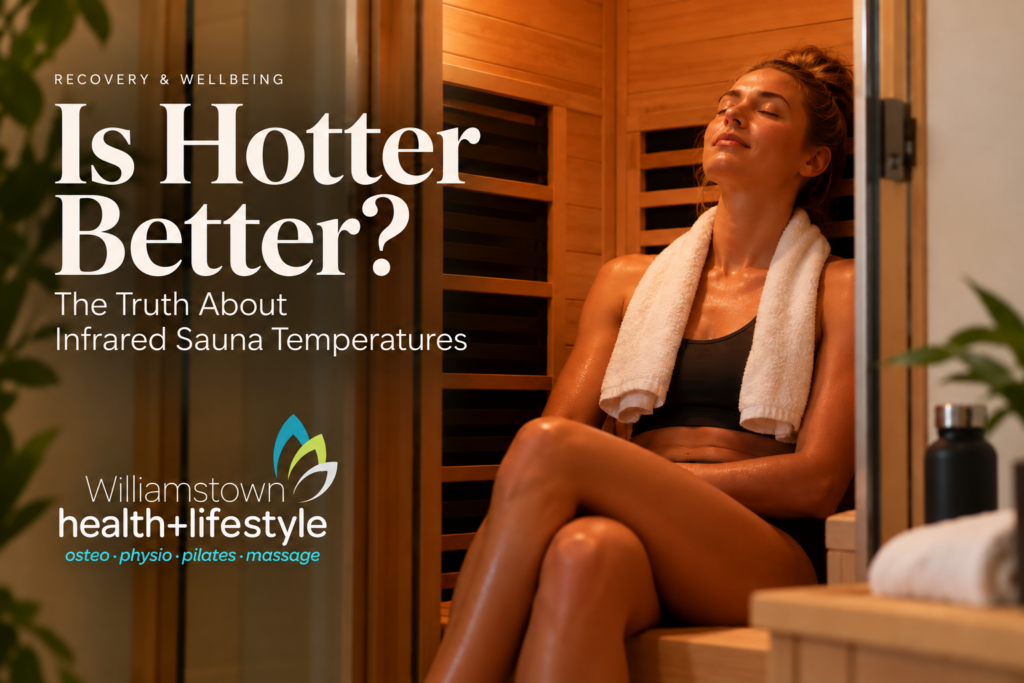
Is Hotter Better? The Truth About Infrared Sauna Temperatures
When it comes to saunas, there is a common belief that the hotter you go, the better the results. More heat means more sweat, and more sweat must mean more benefits, right?
Not necessarily.
Infrared saunas have become increasingly popular for relaxation, recovery and general wellbeing. But one of the questions we often hear is, "How hot should an infrared sauna actually be?"
The answer is a little more interesting than simply turning the temperature up as high as it will go.
Whether you are looking to unwind after a long day, ease tired muscles or incorporate regular sauna sessions into your wellness routine, understanding how temperature affects your body can help you get more out of your experience.
How is an infrared sauna different from a traditional sauna?
Traditional saunas heat the air around you, often reaching temperatures of 70°C to 100°C.
Infrared saunas work differently. They use infrared radiation to deliver heat directly to your body, rather than relying primarily on heating the surrounding air.
This allows infrared saunas to produce a warming effect at lower air temperatures, typically between 45°C and 60°C.
Just because infrared saunas can operate at lower temperatures does not mean temperature is irrelevant.
The temperature, duration of your session and how your body responds all influence the experience.
What actually happens to your body when you get hot?
As your body heats up, it begins working to regulate its internal temperature.
Your blood vessels widen, blood flow to the skin increases, your heart rate may rise, and your sweat glands become more active.
These responses help your body release excess heat.
The intensity of these changes depends on several factors, including the sauna temperature, how long you remain inside, your hydration and your individual tolerance to heat.
A warmer sauna may produce a greater physiological response, but that does not automatically translate into greater health benefits.
What does the research say about higher temperatures?
One of the more interesting areas of sauna research is the relationship between temperature and the body's response to heat.
A 2025 study published in the American Journal of Physiology compared traditional saunas, infrared saunas and hot water immersion.
During the infrared sauna session, the measured air temperature averaged approximately 45°C. Researchers observed changes in cardiovascular activity, but participants did not experience a meaningful increase in core body temperature.
This raises an important question.
If an infrared sauna operates at a higher temperature, does it produce a more significant response?
What happens at 65°C?
A small study published in 2026 examined 12 healthy adults during a 45 minute infrared sauna session at approximately 65°C.
Participants experienced substantial heat stress, and two ended their sessions early because of discomfort.
These findings suggest that a hotter infrared sauna can create a greater physiological heat stimulus than a cooler one.
This was a small study involving healthy adults. It did not establish that hotter temperatures lead to better long term health, faster muscle recovery or improved sporting performance.
Greater heat exposure can place greater demands on your body.
The important distinction is that producing a stronger physiological response is not necessarily the same as producing a better health outcome.
So, what is the best temperature for an infrared sauna?
There is not one perfect temperature for everyone.
A comfortable session for someone who regularly uses a sauna may feel overwhelming to someone stepping inside for the first time.
Your ideal temperature will depend on your experience, the duration of your session and what you want to achieve.
A gentler introduction
A lower temperature may be more comfortable for beginners or those who prefer a less intense heat experience.
A warmer sauna experience
A typical infrared sauna temperature range that allows users to experience sustained warmth and sweating. Duration should be adjusted to individual comfort.
A more intense heat experience
Higher temperatures can produce a greater heat load. They also increase the importance of monitoring comfort, hydration and session duration.
These temperature ranges are general guides, not scientifically established treatment zones or prescribed temperature targets.
The goal is to find a temperature that provides an enjoyable, tolerable experience without pushing your body beyond its limits.
Does sweating more mean you are getting more benefits?
Not necessarily.
Sweating is your body's natural cooling mechanism. The amount you sweat is influenced by your body temperature, the surrounding environment, your fitness, hydration and how accustomed you are to heat.
A person who sweats heavily is not necessarily receiving greater health benefits than someone who sweats less.
And despite some popular claims, sweating more does not mean you are detoxifying your body more effectively.
Your liver and kidneys perform the majority of the body's detoxification work. There is insufficient evidence that sauna based detox programs improve the removal of harmful substances.
Remember, the weight you lose through sweating is predominantly fluid, not body fat.
What about muscle recovery and relaxation?
For many people, the appeal of an infrared sauna is not simply getting hot. It is how they feel afterwards.
Heat can help people relax, temporarily ease muscle tension and provide relief from some forms of muscle and joint discomfort.
There is also emerging evidence that sauna bathing may have cardiovascular benefits, although the research specifically examining infrared saunas remains limited.
What we do not yet know is whether increasing an infrared sauna from 50°C to 60°C, for example, produces superior muscle recovery or better long term health outcomes.
If you are using a sauna after exercise, consider the demands of your training session.
Following a particularly strenuous workout, excessive additional heat may contribute to dehydration and fatigue.
Your recovery should leave you feeling refreshed, not exhausted.
How long should you spend in an infrared sauna?
Temperature is only one part of the equation. Session duration matters just as much.
A short session at a higher temperature can produce a very different response from a longer session at a lower temperature.
If you are new to infrared saunas, begin with approximately 5 to 10 minutes at a comfortable temperature, gradually increasing your exposure as you become accustomed to the heat.
For many healthy adults, a session of around 15 to 20 minutes is a reasonable starting point, with longer sessions considered according to individual tolerance.
Longer sessions and higher temperatures are not automatically better. Always consider how you feel and adjust your session accordingly.
Drink water before and after your session, avoid alcohol, and leave the sauna immediately if you experience dizziness, nausea, weakness or feel unwell.
If you are pregnant, have a cardiovascular condition, experience problems with heat tolerance or have another relevant medical condition, seek medical advice before using a sauna.
Experience infrared sauna at Williamstown Health + Lifestyle
At Williamstown Health + Lifestyle, we believe recovery is about finding what works for you.
Our private recovery room features a Kiva infrared sauna, providing a welcoming space to unwind, relax and enjoy the warmth after a busy day or a demanding training session.
Whether you are an experienced sauna user who enjoys a hotter environment or someone trying infrared sauna for the first time, our team can help you understand the experience and choose a comfortable starting point.
You can also explore our recovery boots as part of your recovery routine.
Your recovery. Your way.
Take time for yourself in our private infrared sauna and recovery space in the heart of Williamstown.
30 minute session
30 minute session
95 Douglas Parade, Williamstown VIC 3016
Questions? Call
(03) 9397 8877
The bottom line: Is hotter actually better?
Higher temperatures can create a stronger physiological response, but more heat does not automatically mean more health benefits.
There is still much to learn about the ideal combination of temperature, duration and frequency for different health and recovery goals.
For now, the most sensible approach is to use a temperature that suits your experience, remain mindful of your body's response and avoid turning every sauna session into a test of endurance.
Because when it comes to recovery, it is not about how much heat you can tolerate.
It is about finding the experience that works for you.